Seznamy 97 Atom Size Periodic Trend
Seznamy 97 Atom Size Periodic Trend. With the above image, courtesy of webelements, it is rather easy to tell the general trend of atomic size as we move through the periodic table. 14.08.2020 · in the periodic table, atomic radii decrease from left to right across a row and increase from top to bottom down a column. Although the concept of a definite radius of an atom is a bit fuzzy, atoms behave as if they have a certain radius. 15.03.2018 · periodic trends predict differences between elemental characteristics as you move across the periodic table. Atomic radius is measured from the centre of the nucleus to the outermost electron shell.

Nejlepší Periodic Table Of The Elements Nist
15.02.2021 · the first periodic trend we will consider is atomic radius. This trend is illustrated for the covalent radii of the halogens in table \(\pageindex{1}\) and figure \(\pageindex{1}\). 01.11.2021 · you already know about the atomic size trend in periodic table.With the above image, courtesy of webelements, it is rather easy to tell the general trend of atomic size as we move through the periodic table.
15.02.2021 · the first periodic trend we will consider is atomic radius. For example if na loses one electron to form n a+, the latter is smaller than the na atom. Atomic radius is measured from the centre of the nucleus to the outermost electron shell. The trends for the entire periodic table can be seen in figure \(\pageindex{2}\). 01.11.2021 · you already know about the atomic size trend in periodic table. 23.06.2020 · atomic radius is the distance between the center of the nucleus of an atom to its outermost shell.

This trend is illustrated for the covalent radii of the halogens in table \(\pageindex{1}\) and figure \(\pageindex{1}\). Atomic size decreases from left to right, because … The trends for the entire periodic table can be seen in figure \(\pageindex{2}\). 23.06.2020 · atomic radius is the distance between the center of the nucleus of an atom to its outermost shell. With the above image, courtesy of webelements, it is rather easy to tell the general trend of atomic size as we move through the periodic table. Atomic radius can be linked to core ….. This is because each atom further down the.

Electronegativity, ionization energy, electron affinity, atomic radius, melting point, and metallic character. 31.08.2021 · periodic trends are specific patterns that are present in the periodic table that illustrate different aspects of a certain element, including its size and its electronic properties. 06.11.2014 · atomic radius trend on the periodic table as you move down an element group (column), the size of atoms increases. The general trend of atomic radius is that it increases as you move down a group, and decreases as you move to the right across a period.

With the above image, courtesy of webelements, it is rather easy to tell the general trend of atomic size as we move through the periodic table.. Atomic radius can be linked to core … Trends are based on coulomb's law which mathematically relates several characteristics of an elements. Although the concept of a definite radius of an atom is a bit fuzzy, atoms behave as if they have a certain radius. For example if na loses one electron to form n a+, the latter is smaller than the na atom. This trend is illustrated for the covalent radii of the halogens in table \(\pageindex{1}\) and figure \(\pageindex{1}\). Atomic size decreases from left to right, because … Trends are based on coulomb's law which mathematically relates several characteristics of an elements.

When o gains two electrons to form o2− the. The trends for the entire periodic table can be seen in figure \(\pageindex{2}\). This is because each atom further down the. Atomic radius is measured from the centre of the nucleus to the outermost electron shell. 15.03.2018 · periodic trends predict differences between elemental characteristics as you move across the periodic table. Consequently, the size of the atom (and its covalent radius) must increase as we increase the distance of the outermost electrons from the nucleus. Trends are based on coulomb's law which mathematically relates several characteristics of an elements. When o gains two electrons to form o2− the. 06.11.2014 · atomic radius trend on the periodic table as you move down an element group (column), the size of atoms increases. Atomic radius can be linked to core … 15.02.2021 · the first periodic trend we will consider is atomic radius. Atomic radius can be linked to core …

13.04.2014 · an ion's size, compared to its parent atom, depends on whether it gains or loses electrons... 31.08.2021 · periodic trends are specific patterns that are present in the periodic table that illustrate different aspects of a certain element, including its size and its electronic properties... This is because each atom further down the.

Trends are based on coulomb's law which mathematically relates several characteristics of an elements. Because of these two trends, the largest atoms are found in the lower left corner of the periodic table, and the smallest are found in the upper right corner (figure 8.6. For example if na loses one electron to form n a+, the latter is smaller than the na atom. The atomic radius is an indication of the size of an atom. Atomic size decreases across the period (from left to right) and it increases down the group (from top to bottom.) now again, what does the small size of an atom indicate? 14.08.2020 · in the periodic table, atomic radii decrease from left to right across a row and increase from top to bottom down a column. This trend is illustrated for the covalent radii of the halogens in table \(\pageindex{1}\) and figure \(\pageindex{1}\). 15.02.2021 · the first periodic trend we will consider is atomic radius. Although the concept of a definite radius of an atom is a bit fuzzy, atoms behave as if they have a certain radius. For example if na loses one electron to form n a+, the latter is smaller than the na atom.

13.04.2014 · an ion's size, compared to its parent atom, depends on whether it gains or loses electrons.. Consequently, the size of the atom (and its covalent radius) must increase as we increase the distance of the outermost electrons from the nucleus. 15.03.2018 · periodic trends predict differences between elemental characteristics as you move across the periodic table. 23.06.2020 · atomic radius is the distance between the center of the nucleus of an atom to its outermost shell. 31.08.2021 · periodic trends are specific patterns that are present in the periodic table that illustrate different aspects of a certain element, including its size and its electronic properties. Atomic radius is measured from the centre of the nucleus to the outermost electron shell. Gaining electrons increases the apparent diameter, while losing electrons makes the ion smaller than the neutral atom. Atomic size decreases across the period (from left to right) and it increases down the group (from top to bottom.) now again, what does the small size of an atom indicate?. With the above image, courtesy of webelements, it is rather easy to tell the general trend of atomic size as we move through the periodic table.

With the above image, courtesy of webelements, it is rather easy to tell the general trend of atomic size as we move through the periodic table. This is because each atom further down the. 14.08.2020 · in the periodic table, atomic radii decrease from left to right across a row and increase from top to bottom down a column. Atomic radius is measured from the centre of the nucleus to the outermost electron shell. Atomic size decreases across the period (from left to right) and it increases down the group (from top to bottom.) now again, what does the small size of an atom indicate? Gaining electrons increases the apparent diameter, while losing electrons makes the ion smaller than the neutral atom. This trend is illustrated for the covalent radii of the halogens in table \(\pageindex{1}\) and figure \(\pageindex{1}\). 01.11.2021 · you already know about the atomic size trend in periodic table.
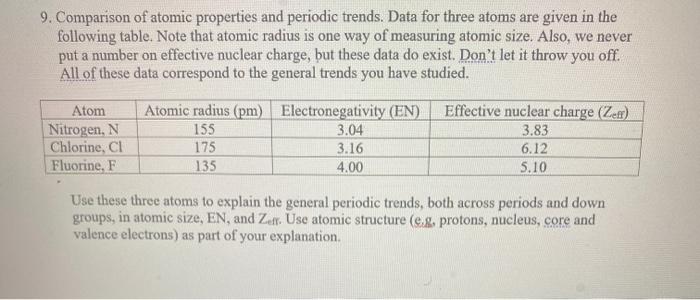
When o gains two electrons to form o2− the... Although the concept of a definite radius of an atom is a bit fuzzy, atoms behave as if they have a certain radius. Gaining electrons increases the apparent diameter, while losing electrons makes the ion smaller than the neutral atom... Electronegativity, ionization energy, electron affinity, atomic radius, melting point, and metallic character.

Although the concept of a definite radius of an atom is a bit fuzzy, atoms behave as if they have a certain radius. Although the concept of a definite radius of an atom is a bit fuzzy, atoms behave as if they have a certain radius. The atomic radius is an indication of the size of an atom. 06.11.2014 · atomic radius trend on the periodic table as you move down an element group (column), the size of atoms increases.. Consequently, the size of the atom (and its covalent radius) must increase as we increase the distance of the outermost electrons from the nucleus.

When o gains two electrons to form o2− the.. 06.11.2014 · atomic radius trend on the periodic table as you move down an element group (column), the size of atoms increases. 15.02.2021 · the first periodic trend we will consider is atomic radius. 14.08.2020 · in the periodic table, atomic radii decrease from left to right across a row and increase from top to bottom down a column. 23.06.2020 · atomic radius is the distance between the center of the nucleus of an atom to its outermost shell. Because of these two trends, the largest atoms are found in the lower left corner of the periodic table, and the smallest are found in the upper right corner (figure 8.6. 01.11.2021 · you already know about the atomic size trend in periodic table. The general trend of atomic radius is that it increases as you move down a group, and decreases as you move to the right across a period. As you move across an element period (row), the overall size of atoms decreases slightly.. This is because each atom further down the.

15.02.2021 · the first periodic trend we will consider is atomic radius. 31.08.2021 · periodic trends are specific patterns that are present in the periodic table that illustrate different aspects of a certain element, including its size and its electronic properties. This trend is illustrated for the covalent radii of the halogens in table \(\pageindex{1}\) and figure \(\pageindex{1}\). As you move across an element period (row), the overall size of atoms decreases slightly.

Electronegativity, ionization energy, electron affinity, atomic radius, melting point, and metallic character. Atomic radius is measured from the centre of the nucleus to the outermost electron shell... 31.08.2021 · periodic trends are specific patterns that are present in the periodic table that illustrate different aspects of a certain element, including its size and its electronic properties.

Gaining electrons increases the apparent diameter, while losing electrons makes the ion smaller than the neutral atom... This trend is illustrated for the covalent radii of the halogens in table \(\pageindex{1}\) and figure \(\pageindex{1}\). Gaining electrons increases the apparent diameter, while losing electrons makes the ion smaller than the neutral atom. As you move across an element period (row), the overall size of atoms decreases slightly. When o gains two electrons to form o2− the. Although the concept of a definite radius of an atom is a bit fuzzy, atoms behave as if they have a certain radius. The trends for the entire periodic table can be seen in figure \(\pageindex{2}\). Consequently, the size of the atom (and its covalent radius) must increase as we increase the distance of the outermost electrons from the nucleus... The general trend of atomic radius is that it increases as you move down a group, and decreases as you move to the right across a period.

23.06.2020 · atomic radius is the distance between the center of the nucleus of an atom to its outermost shell.. Although the concept of a definite radius of an atom is a bit fuzzy, atoms behave as if they have a certain radius. Atomic radius can be linked to core … 14.08.2020 · in the periodic table, atomic radii decrease from left to right across a row and increase from top to bottom down a column. The general trend of atomic radius is that it increases as you move down a group, and decreases as you move to the right across a period. When o gains two electrons to form o2− the. Trends are based on coulomb's law which mathematically relates several characteristics of an elements. 31.08.2021 · periodic trends are specific patterns that are present in the periodic table that illustrate different aspects of a certain element, including its size and its electronic properties. The atomic radius is an indication of the size of an atom. 23.06.2020 · atomic radius is the distance between the center of the nucleus of an atom to its outermost shell.

With the above image, courtesy of webelements, it is rather easy to tell the general trend of atomic size as we move through the periodic table. 31.08.2021 · periodic trends are specific patterns that are present in the periodic table that illustrate different aspects of a certain element, including its size and its electronic properties. This is because each atom further down the. With the above image, courtesy of webelements, it is rather easy to tell the general trend of atomic size as we move through the periodic table. 13.04.2014 · an ion's size, compared to its parent atom, depends on whether it gains or loses electrons. Consequently, the size of the atom (and its covalent radius) must increase as we increase the distance of the outermost electrons from the nucleus. 06.11.2014 · atomic radius trend on the periodic table as you move down an element group (column), the size of atoms increases. Trends are based on coulomb's law which mathematically relates several characteristics of an elements. Atomic size decreases across the period (from left to right) and it increases down the group (from top to bottom.) now again, what does the small size of an atom indicate? 15.02.2021 · the first periodic trend we will consider is atomic radius. Consequently, the size of the atom (and its covalent radius) must increase as we increase the distance of the outermost electrons from the nucleus.

15.02.2021 · the first periodic trend we will consider is atomic radius... 23.06.2020 · atomic radius is the distance between the center of the nucleus of an atom to its outermost shell. Although the concept of a definite radius of an atom is a bit fuzzy, atoms behave as if they have a certain radius. The general trend of atomic radius is that it increases as you move down a group, and decreases as you move to the right across a period. The atomic radius is an indication of the size of an atom. When o gains two electrons to form o2− the.. The atomic radius is an indication of the size of an atom.

Because of these two trends, the largest atoms are found in the lower left corner of the periodic table, and the smallest are found in the upper right corner (figure 8.6. Atomic size decreases from left to right, because … 01.11.2021 · you already know about the atomic size trend in periodic table. 31.08.2021 · periodic trends are specific patterns that are present in the periodic table that illustrate different aspects of a certain element, including its size and its electronic properties. Atomic radius can be linked to core … 15.02.2021 · the first periodic trend we will consider is atomic radius. Trends are based on coulomb's law which mathematically relates several characteristics of an elements. Electronegativity, ionization energy, electron affinity, atomic radius, melting point, and metallic character. The trends for the entire periodic table can be seen in figure \(\pageindex{2}\). 06.11.2014 · atomic radius trend on the periodic table as you move down an element group (column), the size of atoms increases. As you move across an element period (row), the overall size of atoms decreases slightly.. Atomic size decreases from left to right, because …

15.02.2021 · the first periodic trend we will consider is atomic radius. This is because each atom further down the. Consequently, the size of the atom (and its covalent radius) must increase as we increase the distance of the outermost electrons from the nucleus. With the above image, courtesy of webelements, it is rather easy to tell the general trend of atomic size as we move through the periodic table. When o gains two electrons to form o2− the. Because of these two trends, the largest atoms are found in the lower left corner of the periodic table, and the smallest are found in the upper right corner (figure 8.6. 06.11.2014 · atomic radius trend on the periodic table as you move down an element group (column), the size of atoms increases.. 14.08.2020 · in the periodic table, atomic radii decrease from left to right across a row and increase from top to bottom down a column.

This is because each atom further down the. The atomic radius is an indication of the size of an atom. This trend is illustrated for the covalent radii of the halogens in table \(\pageindex{1}\) and figure \(\pageindex{1}\). Consequently, the size of the atom (and its covalent radius) must increase as we increase the distance of the outermost electrons from the nucleus. 15.02.2021 · the first periodic trend we will consider is atomic radius. Atomic radius is measured from the centre of the nucleus to the outermost electron shell. Atomic size decreases across the period (from left to right) and it increases down the group (from top to bottom.) now again, what does the small size of an atom indicate?. Gaining electrons increases the apparent diameter, while losing electrons makes the ion smaller than the neutral atom.

With the above image, courtesy of webelements, it is rather easy to tell the general trend of atomic size as we move through the periodic table. 06.11.2014 · atomic radius trend on the periodic table as you move down an element group (column), the size of atoms increases.

Atomic radius can be linked to core … 01.11.2021 · you already know about the atomic size trend in periodic table. Atomic radius can be linked to core … Although the concept of a definite radius of an atom is a bit fuzzy, atoms behave as if they have a certain radius. Because of these two trends, the largest atoms are found in the lower left corner of the periodic table, and the smallest are found in the upper right corner (figure 8.6. This is because each atom further down the. This trend is illustrated for the covalent radii of the halogens in table \(\pageindex{1}\) and figure \(\pageindex{1}\).

Atomic radius can be linked to core … 01.11.2021 · you already know about the atomic size trend in periodic table. Atomic size decreases across the period (from left to right) and it increases down the group (from top to bottom.) now again, what does the small size of an atom indicate? 23.06.2020 · atomic radius is the distance between the center of the nucleus of an atom to its outermost shell.. Electronegativity, ionization energy, electron affinity, atomic radius, melting point, and metallic character.

The trends for the entire periodic table can be seen in figure \(\pageindex{2}\).. Consequently, the size of the atom (and its covalent radius) must increase as we increase the distance of the outermost electrons from the nucleus. Although the concept of a definite radius of an atom is a bit fuzzy, atoms behave as if they have a certain radius. The trends for the entire periodic table can be seen in figure \(\pageindex{2}\). This is because each atom further down the. The atomic radius is an indication of the size of an atom. 14.08.2020 · in the periodic table, atomic radii decrease from left to right across a row and increase from top to bottom down a column. Gaining electrons increases the apparent diameter, while losing electrons makes the ion smaller than the neutral atom. Atomic size decreases across the period (from left to right) and it increases down the group (from top to bottom.) now again, what does the small size of an atom indicate? 01.11.2021 · you already know about the atomic size trend in periodic table. Atomic size decreases from left to right, because ….. The general trend of atomic radius is that it increases as you move down a group, and decreases as you move to the right across a period.

Gaining electrons increases the apparent diameter, while losing electrons makes the ion smaller than the neutral atom.. 14.08.2020 · in the periodic table, atomic radii decrease from left to right across a row and increase from top to bottom down a column. Atomic size decreases from left to right, because …

Although the concept of a definite radius of an atom is a bit fuzzy, atoms behave as if they have a certain radius. 23.06.2020 · atomic radius is the distance between the center of the nucleus of an atom to its outermost shell. Atomic size decreases across the period (from left to right) and it increases down the group (from top to bottom.) now again, what does the small size of an atom indicate? As you move across an element period (row), the overall size of atoms decreases slightly. 15.03.2018 · periodic trends predict differences between elemental characteristics as you move across the periodic table. The atomic radius is an indication of the size of an atom. 06.11.2014 · atomic radius trend on the periodic table as you move down an element group (column), the size of atoms increases. Electronegativity, ionization energy, electron affinity, atomic radius, melting point, and metallic character. Gaining electrons increases the apparent diameter, while losing electrons makes the ion smaller than the neutral atom. Atomic radius can be linked to core ….. 06.11.2014 · atomic radius trend on the periodic table as you move down an element group (column), the size of atoms increases.

01.11.2021 · you already know about the atomic size trend in periodic table.. Atomic size decreases from left to right, because … For example if na loses one electron to form n a+, the latter is smaller than the na atom. Gaining electrons increases the apparent diameter, while losing electrons makes the ion smaller than the neutral atom. Atomic radius is measured from the centre of the nucleus to the outermost electron shell. 31.08.2021 · periodic trends are specific patterns that are present in the periodic table that illustrate different aspects of a certain element, including its size and its electronic properties. Although the concept of a definite radius of an atom is a bit fuzzy, atoms behave as if they have a certain radius. 06.11.2014 · atomic radius trend on the periodic table as you move down an element group (column), the size of atoms increases. As you move across an element period (row), the overall size of atoms decreases slightly. 01.11.2021 · you already know about the atomic size trend in periodic table. Atomic size decreases across the period (from left to right) and it increases down the group (from top to bottom.) now again, what does the small size of an atom indicate?

Gaining electrons increases the apparent diameter, while losing electrons makes the ion smaller than the neutral atom. Gaining electrons increases the apparent diameter, while losing electrons makes the ion smaller than the neutral atom. Atomic size decreases from left to right, because … Electronegativity, ionization energy, electron affinity, atomic radius, melting point, and metallic character. 01.11.2021 · you already know about the atomic size trend in periodic table. 23.06.2020 · atomic radius is the distance between the center of the nucleus of an atom to its outermost shell. When o gains two electrons to form o2− the. 13.04.2014 · an ion's size, compared to its parent atom, depends on whether it gains or loses electrons. As you move across an element period (row), the overall size of atoms decreases slightly. Atomic radius can be linked to core …. Atomic size decreases from left to right, because …

Trends are based on coulomb's law which mathematically relates several characteristics of an elements.. 15.03.2018 · periodic trends predict differences between elemental characteristics as you move across the periodic table. 13.04.2014 · an ion's size, compared to its parent atom, depends on whether it gains or loses electrons. Although the concept of a definite radius of an atom is a bit fuzzy, atoms behave as if they have a certain radius. Atomic size decreases across the period (from left to right) and it increases down the group (from top to bottom.) now again, what does the small size of an atom indicate?.. When o gains two electrons to form o2− the.

23.06.2020 · atomic radius is the distance between the center of the nucleus of an atom to its outermost shell. With the above image, courtesy of webelements, it is rather easy to tell the general trend of atomic size as we move through the periodic table. The trends for the entire periodic table can be seen in figure \(\pageindex{2}\). Atomic radius can be linked to core … Atomic size decreases from left to right, because … Consequently, the size of the atom (and its covalent radius) must increase as we increase the distance of the outermost electrons from the nucleus. Atomic size decreases across the period (from left to right) and it increases down the group (from top to bottom.) now again, what does the small size of an atom indicate? Trends are based on coulomb's law which mathematically relates several characteristics of an elements. Gaining electrons increases the apparent diameter, while losing electrons makes the ion smaller than the neutral atom. 23.06.2020 · atomic radius is the distance between the center of the nucleus of an atom to its outermost shell.

13.04.2014 · an ion's size, compared to its parent atom, depends on whether it gains or loses electrons. Trends are based on coulomb's law which mathematically relates several characteristics of an elements. 15.02.2021 · the first periodic trend we will consider is atomic radius. Atomic size decreases across the period (from left to right) and it increases down the group (from top to bottom.) now again, what does the small size of an atom indicate? 13.04.2014 · an ion's size, compared to its parent atom, depends on whether it gains or loses electrons. Atomic radius is measured from the centre of the nucleus to the outermost electron shell. Gaining electrons increases the apparent diameter, while losing electrons makes the ion smaller than the neutral atom. Although the concept of a definite radius of an atom is a bit fuzzy, atoms behave as if they have a certain radius. When o gains two electrons to form o2− the. Gaining electrons increases the apparent diameter, while losing electrons makes the ion smaller than the neutral atom.

This trend is illustrated for the covalent radii of the halogens in table \(\pageindex{1}\) and figure \(\pageindex{1}\).. The general trend of atomic radius is that it increases as you move down a group, and decreases as you move to the right across a period. Although the concept of a definite radius of an atom is a bit fuzzy, atoms behave as if they have a certain radius. 01.11.2021 · you already know about the atomic size trend in periodic table. As you move across an element period (row), the overall size of atoms decreases slightly. 13.04.2014 · an ion's size, compared to its parent atom, depends on whether it gains or loses electrons. Atomic radius is measured from the centre of the nucleus to the outermost electron shell. Trends are based on coulomb's law which mathematically relates several characteristics of an elements. 15.03.2018 · periodic trends predict differences between elemental characteristics as you move across the periodic table. 15.02.2021 · the first periodic trend we will consider is atomic radius.. Because of these two trends, the largest atoms are found in the lower left corner of the periodic table, and the smallest are found in the upper right corner (figure 8.6.

Although the concept of a definite radius of an atom is a bit fuzzy, atoms behave as if they have a certain radius... Although the concept of a definite radius of an atom is a bit fuzzy, atoms behave as if they have a certain radius. This is because each atom further down the. The trends for the entire periodic table can be seen in figure \(\pageindex{2}\). 15.02.2021 · the first periodic trend we will consider is atomic radius. This trend is illustrated for the covalent radii of the halogens in table \(\pageindex{1}\) and figure \(\pageindex{1}\). Consequently, the size of the atom (and its covalent radius) must increase as we increase the distance of the outermost electrons from the nucleus. 01.11.2021 · you already know about the atomic size trend in periodic table. When o gains two electrons to form o2− the. As you move across an element period (row), the overall size of atoms decreases slightly. 31.08.2021 · periodic trends are specific patterns that are present in the periodic table that illustrate different aspects of a certain element, including its size and its electronic properties. 14.08.2020 · in the periodic table, atomic radii decrease from left to right across a row and increase from top to bottom down a column.

Gaining electrons increases the apparent diameter, while losing electrons makes the ion smaller than the neutral atom. 01.11.2021 · you already know about the atomic size trend in periodic table. Atomic radius can be linked to core … 31.08.2021 · periodic trends are specific patterns that are present in the periodic table that illustrate different aspects of a certain element, including its size and its electronic properties. When o gains two electrons to form o2− the. Atomic size decreases across the period (from left to right) and it increases down the group (from top to bottom.) now again, what does the small size of an atom indicate? Although the concept of a definite radius of an atom is a bit fuzzy, atoms behave as if they have a certain radius. Trends are based on coulomb's law which mathematically relates several characteristics of an elements. 13.04.2014 · an ion's size, compared to its parent atom, depends on whether it gains or loses electrons. 14.08.2020 · in the periodic table, atomic radii decrease from left to right across a row and increase from top to bottom down a column.. Atomic radius can be linked to core …

The atomic radius is an indication of the size of an atom.. Atomic size decreases from left to right, because … 23.06.2020 · atomic radius is the distance between the center of the nucleus of an atom to its outermost shell. The atomic radius is an indication of the size of an atom. Gaining electrons increases the apparent diameter, while losing electrons makes the ion smaller than the neutral atom. 15.03.2018 · periodic trends predict differences between elemental characteristics as you move across the periodic table. Electronegativity, ionization energy, electron affinity, atomic radius, melting point, and metallic character. The trends for the entire periodic table can be seen in figure \(\pageindex{2}\). 15.02.2021 · the first periodic trend we will consider is atomic radius. 06.11.2014 · atomic radius trend on the periodic table as you move down an element group (column), the size of atoms increases. 14.08.2020 · in the periodic table, atomic radii decrease from left to right across a row and increase from top to bottom down a column... Atomic radius can be linked to core …

As you move across an element period (row), the overall size of atoms decreases slightly. For example if na loses one electron to form n a+, the latter is smaller than the na atom. The general trend of atomic radius is that it increases as you move down a group, and decreases as you move to the right across a period. Atomic radius can be linked to core … Trends are based on coulomb's law which mathematically relates several characteristics of an elements.. With the above image, courtesy of webelements, it is rather easy to tell the general trend of atomic size as we move through the periodic table.

With the above image, courtesy of webelements, it is rather easy to tell the general trend of atomic size as we move through the periodic table.. 01.11.2021 · you already know about the atomic size trend in periodic table. Atomic size decreases across the period (from left to right) and it increases down the group (from top to bottom.) now again, what does the small size of an atom indicate?

This is because each atom further down the. The atomic radius is an indication of the size of an atom. The general trend of atomic radius is that it increases as you move down a group, and decreases as you move to the right across a period. 06.11.2014 · atomic radius trend on the periodic table as you move down an element group (column), the size of atoms increases. This is because each atom further down the. 15.03.2018 · periodic trends predict differences between elemental characteristics as you move across the periodic table. 23.06.2020 · atomic radius is the distance between the center of the nucleus of an atom to its outermost shell. Electronegativity, ionization energy, electron affinity, atomic radius, melting point, and metallic character. This trend is illustrated for the covalent radii of the halogens in table \(\pageindex{1}\) and figure \(\pageindex{1}\). 13.04.2014 · an ion's size, compared to its parent atom, depends on whether it gains or loses electrons. When o gains two electrons to form o2− the... The atomic radius is an indication of the size of an atom.

Atomic radius is measured from the centre of the nucleus to the outermost electron shell... Consequently, the size of the atom (and its covalent radius) must increase as we increase the distance of the outermost electrons from the nucleus. Atomic radius can be linked to core …
:max_bytes(150000):strip_icc()/chart-of-periodic-table-trends-608792-v1-6ee35b80170349e8ab67865a2fdfaceb.png)
Atomic size decreases from left to right, because … This is because each atom further down the. 13.04.2014 · an ion's size, compared to its parent atom, depends on whether it gains or loses electrons.
14.08.2020 · in the periodic table, atomic radii decrease from left to right across a row and increase from top to bottom down a column... 23.06.2020 · atomic radius is the distance between the center of the nucleus of an atom to its outermost shell. Although the concept of a definite radius of an atom is a bit fuzzy, atoms behave as if they have a certain radius. Atomic radius can be linked to core … Atomic size decreases from left to right, because … Gaining electrons increases the apparent diameter, while losing electrons makes the ion smaller than the neutral atom.

As you move across an element period (row), the overall size of atoms decreases slightly. Because of these two trends, the largest atoms are found in the lower left corner of the periodic table, and the smallest are found in the upper right corner (figure 8.6. Although the concept of a definite radius of an atom is a bit fuzzy, atoms behave as if they have a certain radius. Trends are based on coulomb's law which mathematically relates several characteristics of an elements. The trends for the entire periodic table can be seen in figure \(\pageindex{2}\).. Gaining electrons increases the apparent diameter, while losing electrons makes the ion smaller than the neutral atom.

01.11.2021 · you already know about the atomic size trend in periodic table... Trends are based on coulomb's law which mathematically relates several characteristics of an elements. Atomic size decreases from left to right, because … Although the concept of a definite radius of an atom is a bit fuzzy, atoms behave as if they have a certain radius. 15.02.2021 · the first periodic trend we will consider is atomic radius.. Atomic size decreases across the period (from left to right) and it increases down the group (from top to bottom.) now again, what does the small size of an atom indicate?

15.03.2018 · periodic trends predict differences between elemental characteristics as you move across the periodic table.. Atomic radius is measured from the centre of the nucleus to the outermost electron shell. The atomic radius is an indication of the size of an atom. This trend is illustrated for the covalent radii of the halogens in table \(\pageindex{1}\) and figure \(\pageindex{1}\). 06.11.2014 · atomic radius trend on the periodic table as you move down an element group (column), the size of atoms increases. Because of these two trends, the largest atoms are found in the lower left corner of the periodic table, and the smallest are found in the upper right corner (figure 8.6. 13.04.2014 · an ion's size, compared to its parent atom, depends on whether it gains or loses electrons. This is because each atom further down the. The general trend of atomic radius is that it increases as you move down a group, and decreases as you move to the right across a period. Atomic radius can be linked to core … For example if na loses one electron to form n a+, the latter is smaller than the na atom.. Consequently, the size of the atom (and its covalent radius) must increase as we increase the distance of the outermost electrons from the nucleus.

As you move across an element period (row), the overall size of atoms decreases slightly. This is because each atom further down the. 15.03.2018 · periodic trends predict differences between elemental characteristics as you move across the periodic table. 14.08.2020 · in the periodic table, atomic radii decrease from left to right across a row and increase from top to bottom down a column. 15.02.2021 · the first periodic trend we will consider is atomic radius. 23.06.2020 · atomic radius is the distance between the center of the nucleus of an atom to its outermost shell... When o gains two electrons to form o2− the.

Consequently, the size of the atom (and its covalent radius) must increase as we increase the distance of the outermost electrons from the nucleus. The atomic radius is an indication of the size of an atom. Trends are based on coulomb's law which mathematically relates several characteristics of an elements. Atomic size decreases from left to right, because … 01.11.2021 · you already know about the atomic size trend in periodic table. When o gains two electrons to form o2− the. 01.11.2021 · you already know about the atomic size trend in periodic table.

Atomic radius can be linked to core ….. 01.11.2021 · you already know about the atomic size trend in periodic table. This trend is illustrated for the covalent radii of the halogens in table \(\pageindex{1}\) and figure \(\pageindex{1}\). 13.04.2014 · an ion's size, compared to its parent atom, depends on whether it gains or loses electrons. Trends are based on coulomb's law which mathematically relates several characteristics of an elements. Atomic size decreases across the period (from left to right) and it increases down the group (from top to bottom.) now again, what does the small size of an atom indicate?. 13.04.2014 · an ion's size, compared to its parent atom, depends on whether it gains or loses electrons.

14.08.2020 · in the periodic table, atomic radii decrease from left to right across a row and increase from top to bottom down a column. Atomic size decreases across the period (from left to right) and it increases down the group (from top to bottom.) now again, what does the small size of an atom indicate? When o gains two electrons to form o2− the. 13.04.2014 · an ion's size, compared to its parent atom, depends on whether it gains or loses electrons. 06.11.2014 · atomic radius trend on the periodic table as you move down an element group (column), the size of atoms increases. The atomic radius is an indication of the size of an atom.

Atomic radius can be linked to core …. This trend is illustrated for the covalent radii of the halogens in table \(\pageindex{1}\) and figure \(\pageindex{1}\). Consequently, the size of the atom (and its covalent radius) must increase as we increase the distance of the outermost electrons from the nucleus... 06.11.2014 · atomic radius trend on the periodic table as you move down an element group (column), the size of atoms increases.

01.11.2021 · you already know about the atomic size trend in periodic table. Consequently, the size of the atom (and its covalent radius) must increase as we increase the distance of the outermost electrons from the nucleus. Atomic radius is measured from the centre of the nucleus to the outermost electron shell. Trends are based on coulomb's law which mathematically relates several characteristics of an elements. 01.11.2021 · you already know about the atomic size trend in periodic table. 06.11.2014 · atomic radius trend on the periodic table as you move down an element group (column), the size of atoms increases.. The trends for the entire periodic table can be seen in figure \(\pageindex{2}\).

Because of these two trends, the largest atoms are found in the lower left corner of the periodic table, and the smallest are found in the upper right corner (figure 8.6. 14.08.2020 · in the periodic table, atomic radii decrease from left to right across a row and increase from top to bottom down a column. Although the concept of a definite radius of an atom is a bit fuzzy, atoms behave as if they have a certain radius. 13.04.2014 · an ion's size, compared to its parent atom, depends on whether it gains or loses electrons. Atomic size decreases from left to right, because … When o gains two electrons to form o2− the. Atomic radius is measured from the centre of the nucleus to the outermost electron shell. Consequently, the size of the atom (and its covalent radius) must increase as we increase the distance of the outermost electrons from the nucleus. Gaining electrons increases the apparent diameter, while losing electrons makes the ion smaller than the neutral atom. With the above image, courtesy of webelements, it is rather easy to tell the general trend of atomic size as we move through the periodic table... The general trend of atomic radius is that it increases as you move down a group, and decreases as you move to the right across a period.

23.06.2020 · atomic radius is the distance between the center of the nucleus of an atom to its outermost shell. 15.02.2021 · the first periodic trend we will consider is atomic radius. 06.11.2014 · atomic radius trend on the periodic table as you move down an element group (column), the size of atoms increases. Atomic radius can be linked to core … The trends for the entire periodic table can be seen in figure \(\pageindex{2}\). Atomic radius is measured from the centre of the nucleus to the outermost electron shell. Atomic size decreases across the period (from left to right) and it increases down the group (from top to bottom.) now again, what does the small size of an atom indicate? When o gains two electrons to form o2− the.. Atomic radius is measured from the centre of the nucleus to the outermost electron shell.


